Understanding the Connection Between US Politics and the Stock Market
Elections bring uncertainty, and uncertainty breeds volatility. Investors try to predict who will win and how their policies might affect taxes, regulation, and spending.
Why Investor Psychology Matters
The stock market runs on two forces — fear and optimism. During election season, both intensify. A pro-business candidate might spark optimism in corporate sectors like energy and banking, while the threat of higher taxes can stir fear among investors.
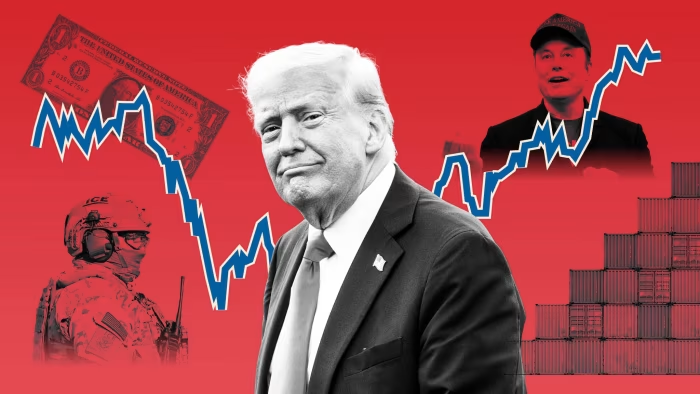
 Example: In the 2016 election, the market dipped before Election Day but surged afterward when investors expected lower corporate taxes and deregulation policies under President Trump.
According to CNBC, such short-term fluctuations are common and rarely signal a permanent trend.
Historical Patterns: What Past US Elections Tell Us
Let’s look at how U.S. elections affect the stock market across different decades.
The “Election Year Effect”
The chart below summarizes the average S&P 500 returns during different stages of the election cycle (based on historical data since 1950):
Election Cycle Stage | Average S&P 500 Return | Common Trend |
Pre-Election Year | +12.8% | Growth-focused policies lift confidence |
Election Year | +6.6% | Volatility but mild gains |
Post-Election Year | +5.8% | Market stabilizes as policies clarify |
Mid-Term Year | +4.0% | Usually slower growth |
(Source: Bloomberg, LPL Research, historical averages 1950–2020)
 Observation: Despite short-term jitters, the U.S. stock market usually ends up higher by year-end, especially when the incumbent party wins.

How Investors Typically Respond
Short-Term: Expect Volatility
As campaigns heat up, polls and headlines move the markets daily. Many investors shift to “safe-haven” assets like gold, bonds, or dividend stocks.
Example Chart (Simplified)
S&P 500 Average Daily Volatility (%):
Election Year: ██████████ (1.2%)
Non-Election Year: ████ (0.6%)
Volatility nearly doubles during election years.
Long-Term: Steady Growth Returns
Once the election results settle, markets often rebound quickly. Data from Bloomberg shows that within six months of every U.S. election since 1950, the S&P 500 has averaged a 7–10% gain.
What Smart Investors Should Do During Election Years
1. Focus on Fundamentals
Elections make headlines, but corporate profits drive stock prices. Stick with quality companies that have strong earnings and steady growth.
2. Diversify for Protection
Holding a balanced mix of assets — stocks, bonds, real estate, and even cash — helps smooth out political volatility.
3. Avoid Emotional Decisions
Short-term dips are normal. Timing the market based on political speculation usually backfires.
4. Use Reliable Information Sources
Follow credible outlets like CNBC, Bloomberg, and Federal Reserve instead of social media rumors.
The Bottom Line
The US elections’ stock market connection is powerful but not permanent. Politics may shake markets in the short run, but the long-term trajectory depends on innovation, earnings, and global economic health.
Elections might change leadership — but not the enduring strength of the American economy.
Quick Summary:
- Election years = volatility
- Long term = recovery and growth
Best strategy = stay invested and diversified